
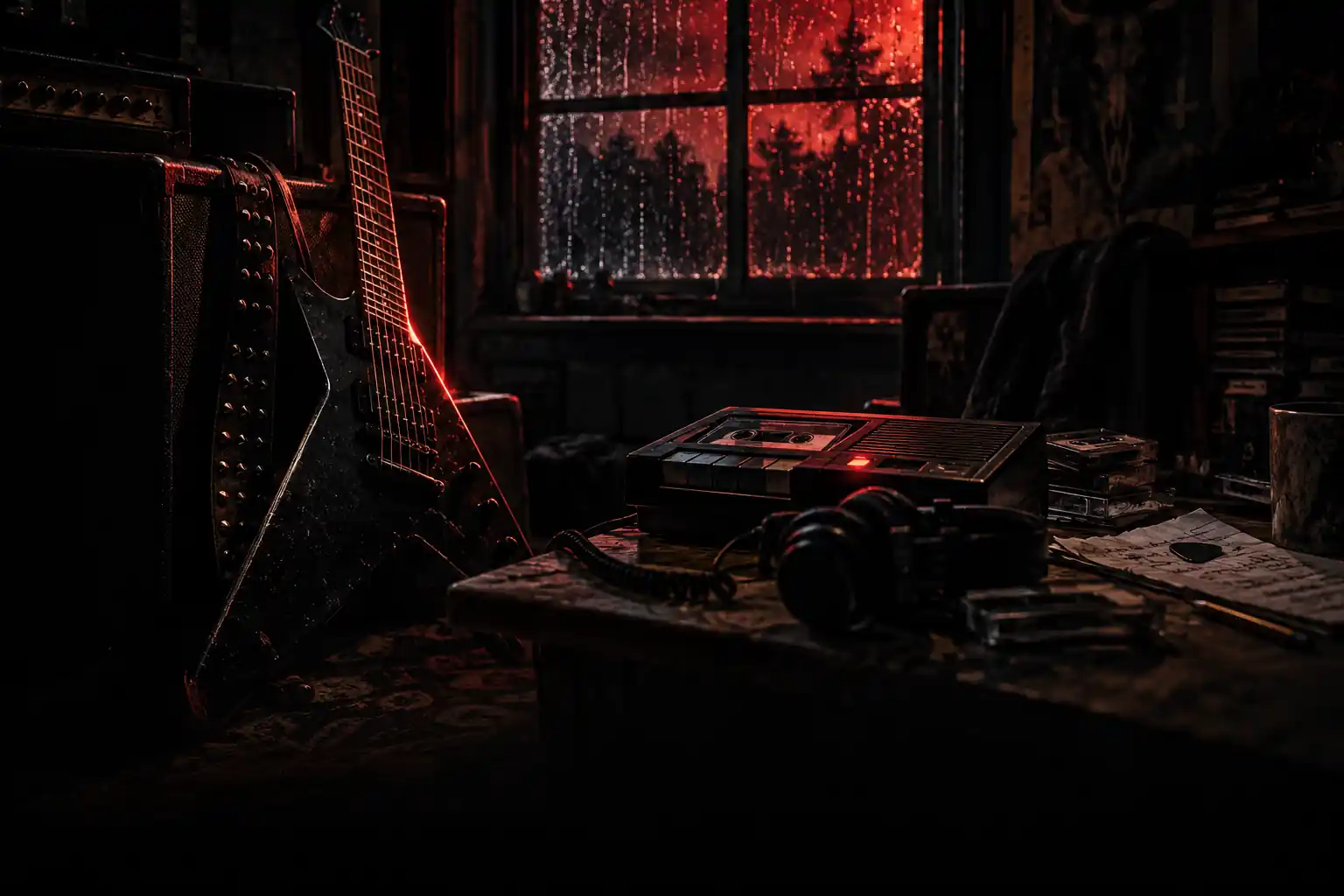
Some riffs arrive with a warning: record this now, or lose it forever.
That was Jeff Hanneman’s reaction when the central idea for “Raining Blood” appeared. Years later, the Slayer guitarist remembered thinking the riff was good enough to grab his recorder immediately, before it disappeared. He built out a rough version on his small recording setup, using a drum machine and adding the ominous buildup and strange guitar textures that would help define the song’s opening atmosphere.
The final recording was still some distance away, but the identity of “Raining Blood” was already there.
Dave Lombardo later remembered Hanneman bringing a cassette demo into rehearsal. The beginning struck the band as unusual. Then the riff arrived. That was the moment, Lombardo recalled, that blew them away.
It is easy, four decades later, to imagine a song this famous as something inevitable — a composition whose every second had been planned before Slayer entered the studio. The band’s own recollections tell a rougher and more interesting story.
Hanneman had the musical foundation, but the song continued to change. He said he began writing the lyrics, reached a point where he was stuck, and Kerry King helped finish them before Hanneman returned for the ending. Tom Araya later remembered “Raining Blood” as the song on Reign in Blood that still needed lyrical work during the recording process. King recalled finishing his section of the lyrics in the studio lobby while Hanneman was working inside.
In other words, one of Slayer’s defining songs was still becoming itself while the album was being made.
That album was Reign in Blood.
Recorded in Los Angeles in 1986 with Rick Rubin and engineer Andy Wallace, it marked Slayer’s first collaboration with Rubin. His approach was brutally economical. Rather than burying the band beneath the heavy reverb common in metal production of the period, Rubin wanted the attack to remain clear and immediate. Dave Lombardo has described Rubin as someone who helped the band place ideas where they mattered instead of simply adding more.
That philosophy suited “Raining Blood” perfectly.
The song does not need excess. Its power comes from anticipation, release and an opening riff simple enough to lodge itself permanently in the listener’s head. Hanneman himself believed that simplicity was part of the reason audiences reacted so strongly to it.
Even the man standing beside him did not immediately hear what was coming. Hanneman remembered playing the early recording for Kerry King and getting little enthusiasm in return. Lombardo and Araya, he said, responded much more strongly.
History settled the argument.
Released as the closing track of Reign in Blood on October 7, 1986, “Raining Blood” became inseparable from Slayer’s identity. Yet beneath the thunder, the rain and the reputation is something much less mythical: a guitarist catching a riff before he forgot it, a cassette brought into rehearsal, lyrics unfinished as recording continued, and a band pushing the song into its final form.
The legend came later.
First, someone had to press record.
Forty years after Reign in Blood, the most revealing part of “Raining Blood” may be how ordinary its beginnings were. No grand plan. No knowledge that the riff would survive for decades. Just an idea strong enough that Jeff Hanneman knew he could not afford to let it disappear.
SOURCES & LINKS
Revolver — Raining Blood: Jeff Hanneman on Origin, Legacy of Slayer’s Defining Song
Louder / Metal Hammer — Slayer: The Epic Oral History of Reign in Blood
GRAMMY — How 1986 Became the Epicenter of a New Metal Sound
The Quietus — Tom Araya Interview
Guitar World — Rick Rubin on Making Reign in Blood
Blabbermouth — Dave Lombardo Recalls Hanneman’s Raining Blood Demo (2025)