
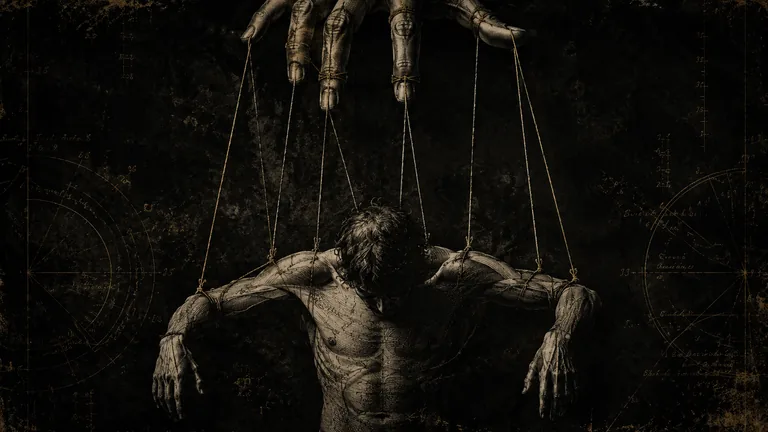
Ιn 1986, Metallica released an album that would become one of the defining records in heavy metal history. But behind the precision, aggression and instantly recognizable riffs of Master of Puppets lies a darker idea: control.
The title track turns the relationship between addiction and the addict upside down. What begins as something a person chooses eventually becomes the thing making the choices.
MORE THAN THRASH
Musically, Master of Puppets was also evidence of a band pushing beyond the limits of straightforward thrash metal.
The title track moves from tightly controlled, aggressive riffing into a slower clean-guitar passage before rebuilding its intensity. Across the album, Metallica combined speed and heaviness with increasingly sophisticated arrangements, melody and dynamics.
That evolution was significant enough for the Library of Congress to later describe the record as Metallica moving beyond simple thrash orthodoxy and exploring new musical ideas.
Lars Ulrich has recalled that this development wasn’t the result of some calculated master plan. The band was young and working largely on instinct. But the musical contributions surrounding James Hetfield and Ulrich — particularly those of Cliff Burton and Kirk Hammett — had expanded what Metallica could do.
FROM METAL ALBUM TO CULTURAL RECORD
Three decades later, the album received an unusual form of recognition.
Master of Puppets was selected for the 2015 National Recording Registry of the Library of Congress, which preserves recordings considered culturally, historically or aesthetically significant.
For a record born from the underground metal scene of the 1980s, that journey is remarkable.
But perhaps the reason Master of Puppets has endured is simpler.
Behind the riffs and speed is a theme that remains instantly understandable: the terrifying moment when something you thought you controlled begins controlling you.
That is the real master behind Master of Puppets.